how long does epoxy flooring last is the first question most homeowners ask — and the honest answer is 10 to 20 years with professional installation and proper concrete preparation.
How Long Does Epoxy Flooring Last? The Key Factors
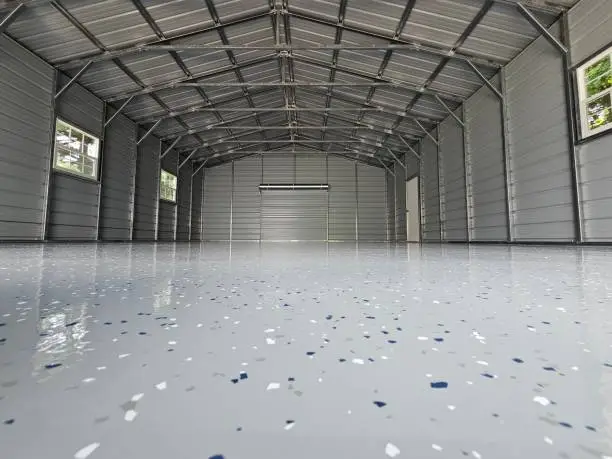
How Long Does Epoxy Flooring Last? A Realistic Answer for Idaho Falls Homeowners
How long does epoxy flooring last? A professionally installed epoxy floor coating lasts 15 to 20 years under normal residential use. That is the honest answer — and the wide range reflects a few key variables that determine whether your floor performs for decades or starts peeling within a few years. The single most important factor is surface preparation. Everything else is secondary.
Idaho Falls Epoxy Pros has installed dozens of epoxy and polyaspartic floor systems throughout southeastern Idaho. Here is exactly what affects how long epoxy flooring lasts — and what we do differently to maximize the lifespan of every floor we coat.
The #1 Factor: Surface Preparation
The reason most failed epoxy floors fail is not the product — it is the prep. Big-box DIY kits and low-price contractors often skip diamond grinding, opting instead for acid etching or simple cleaning. These methods do not open the concrete pores deeply enough for the coating to form a true mechanical bond with the slab. Without that bond, the coating sits on top of the concrete rather than in it. Heat, cold, and traffic eventually break that surface bond and the floor peels.
Diamond grinding removes the top layer of concrete and exposes the aggregate, creating a rough, porous surface that the epoxy penetrates and locks into. This is the industry-standard preparation method for floor coatings that are expected to last. We diamond grind every floor we coat — no exceptions, no shortcuts.
What Else Affects Epoxy Floor Lifespan
Traffic level: A residential garage floor with two vehicles sees far less wear than a commercial shop with constant foot traffic and equipment. Residential floors coated correctly typically outlast the 15-year minimum. High-traffic commercial floors may need recoating sooner depending on the coating system selected.
Topcoat quality: A quality polyurethane or polyaspartic clear topcoat protects the color coat from UV yellowing and surface abrasion. Floors without a proper topcoat fade and scratch faster. Our installations always include a UV-stable clear coat.
Maintenance: Epoxy floors are low-maintenance, not no-maintenance. Sweeping regularly and cleaning up chemical spills promptly extends the life of any floor coating. Dragging sharp or heavy objects without protection can scratch any topcoat over time.
Idaho climate factors: Idaho Falls temperature swings are significant. Floors in unheated garages experience more thermal expansion and contraction than those in climate-controlled spaces. Our product selection accounts for Idaho’s temperature range — we use systems rated for -20°F to 120°F surface temperatures.
3 Signs Your Epoxy Floor Needs Recoating
If your existing epoxy floor shows dullness that does not respond to cleaning, visible scratches or worn areas in high-traffic zones, or peeling at edges or seams, recoating may be the right solution. Recoating an existing epoxy floor is typically more affordable than a full installation because surface prep is simpler on a previously coated slab. Call us to assess your current floor.
For reference on flooring product performance standards, the US Green Building Council covers material durability criteria relevant to floor coating systems in commercial and residential buildings.
See our garage floor epoxy coating and epoxy floor coating cost pages for more details. Call (208) 538-9693 to schedule your free consultation.
How long does epoxy flooring last depends mainly on surface prep quality — floors that are diamond-ground before coating bond at the molecular level and routinely reach 15 to 20 years of service life under normal residential use.