An epoxy floor coating cold weather Idaho Falls project requires special planning: standard epoxy needs surfaces above 50 degrees Fahrenheit, while polyaspartic can be applied year round even in Idaho’s winters.
Epoxy Floor Coating Cold Weather Idaho Falls: What You Need to Know
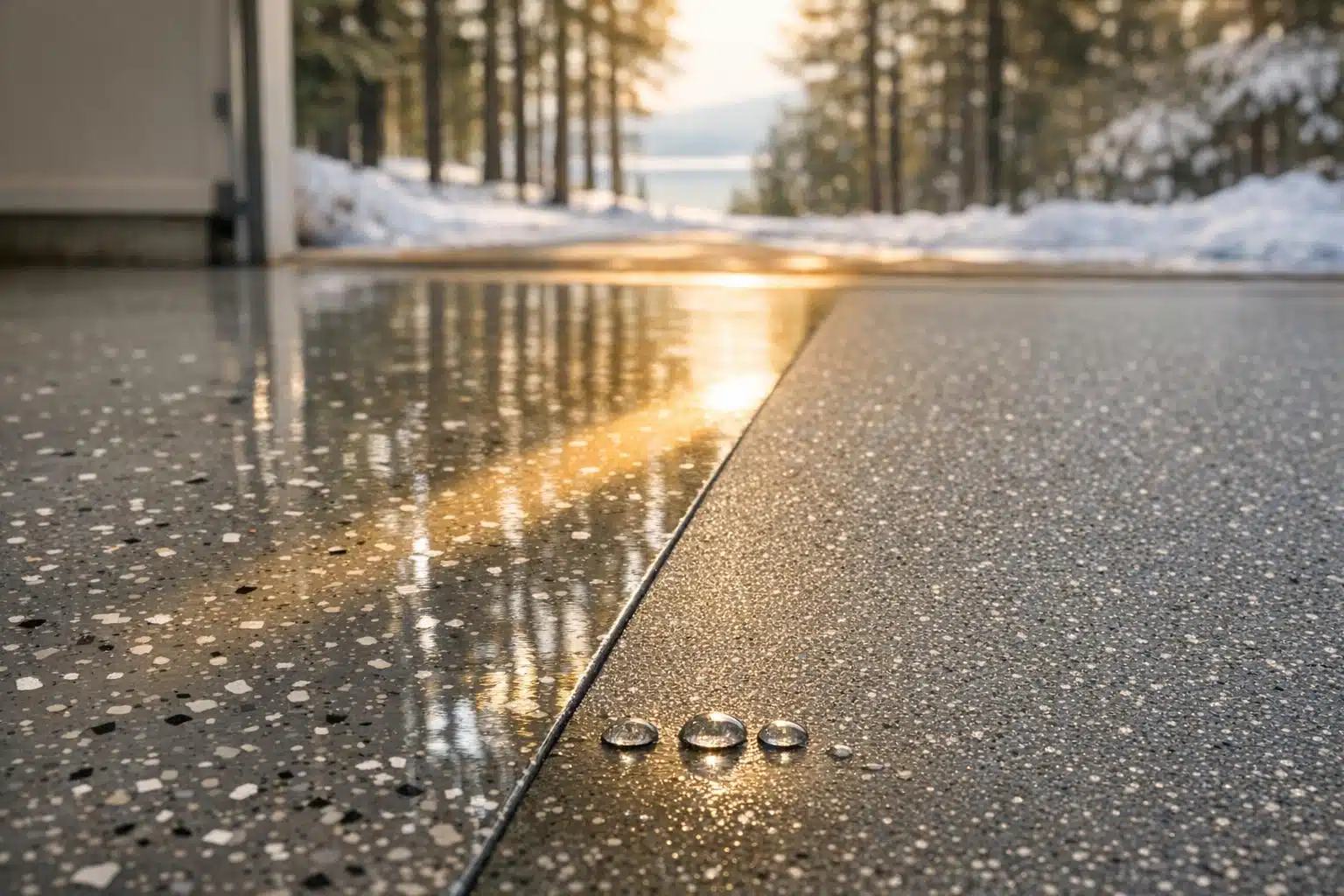
Key Challenges of Cold Weather Installations
Attempting a DIY epoxy floor coating cold weather Idaho Falls application can lead to a total structural failure if you do not understand concrete temperatures. Many homeowners assume that if their garage feels warm with a space heater running, the floor is ready for resin. In reality, concrete acts like a giant ice block, holding sub-surface cold temperatures long after the ambient air has warmed up. If the slab drops below 55 degrees Fahrenheit, traditional epoxy cannot cure properly, remaining sticky, weak, or prone to premature peeling.
When executing an epoxy floor coating cold weather Idaho Falls project, we closely monitor substrate conditions using infrared laser thermometers. If the concrete is too cold, the chemical reaction between the resin and the hardener slows down dramatically or stops entirely. This cross-linking failure ruins the material, meaning it will never achieve its promised industrial strength or chemical resistance attributes.
Standard Epoxy vs Polyaspartic: 50°F vs 0°F
For a successful epoxy floor coating cold weather Idaho Falls installation during late autumn or winter, switching material formulations is often mandatory. Standard commercial epoxies are excellent for summer projects, but winter weather requires polyaspartic and polyurea alternatives. Polyaspartic coatings cure through a completely different chemical pathway that remains unaffected by freezing temperatures, allowing professional crews to complete successful installations down to 0 degrees Fahrenheit.
Polyaspartic coatings also provide a faster cure profile. While winter epoxy might take days to dry enough for foot traffic, a polyaspartic system allows you to return your vehicles and storage items to the garage within 24 hours. Check out our dedicated polyaspartic floor coating page to see how this advanced material stands up to freezing regional climates.
How Professionals Prep Cold Concrete Slabs
Surface preparation adjustments are critical for any epoxy floor coating cold weather Idaho Falls contractor. Cold concrete is denser and harder to profile correctly. We utilize industrial diamond grinders equipped with specialized abrasive segments designed specifically to bite into cold, rigid concrete slabs. Creating the perfect mechanical profile is the only way to ensure the liquid coating sinks deep into the concrete pores for an unbreakable bond.
Moisture tracking is another crucial winter variable. Snow melting off car tires introduces substantial moisture into garage floor pores. Before applying any base layers, our team uses moisture meters to ensure the slab is completely dry. Trapping moisture under a newly applied coating layer causes water vapor pressure bubbles that will eventually rupture your beautiful glossy finish.
Easy Winter Project Scheduling
You do not have to wait until summer to update your garage floor. By choosing an experienced local company equipped with winter-grade materials, an epoxy floor coating cold weather Idaho Falls project can be scheduled smoothly in January or February. Our team balances climate controls, specialized fast-cure primers, and heavy-duty diamond grinding to ensure your winter project performs just as beautifully as our summer installations.
For additional details regarding material properties and curing requirements under cold conditions, the American Concrete Institute provides deep technical research parameters on cold-weather concrete placements and coatings.
Ready to update your cold garage or shop floor? Call (208) 538-9693 or complete the contact form above to book your free winterized on-site quote today.